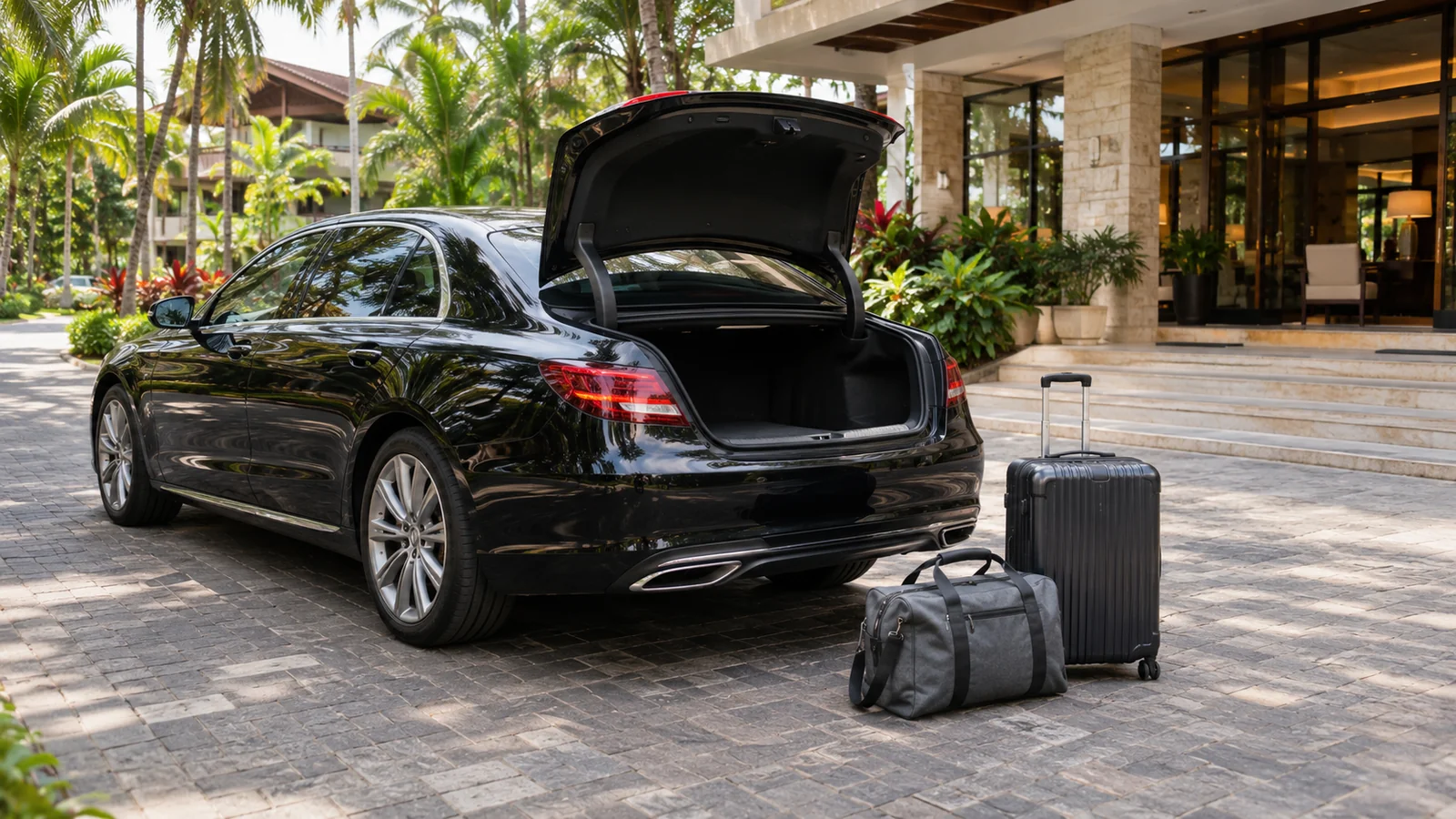
A multi-stop chauffeur booking can create an awkward question: what happens to the bags while everyone is at a meeting, restaurant or property viewing? The car may be part of the next journey, but that does not automatically mean storage, continuous custody or immediate access has been agreed. Resolve the question before the group steps away.
Start with the chauffeur service enquiry and describe the entire day. This guide helps define a luggage arrangement; it does not promise that a vehicle can hold bags between stops or that a booking includes safekeeping of belongings.
Separate the ride from the storage request
List when bags enter the vehicle, which stops happen while they are aboard and when they must be collected. Ask whether the proposed service allows that arrangement. A transfer that ends at a restaurant and a continuous booking across several appointments are different proposals, even if the same model appears in both.
The transfer-versus-hourly guide explains the booking comparison. For luggage, go one step further: ask whether the actual car remains assigned, whether it may leave the immediate area, and how access to bags would work. Do not infer those answers from the word “waiting.”
Decide what travels with each person
Before departure, separate what guests need at the stop from bags they would like to leave under the agreed arrangement. Keep personally essential items with their owners where practical. A passport needed at the next appointment is not useful in a bag that is unavailable until the evening handover.
Ask guests about bulky or unusual items before selecting the vehicle. Give approximate dimensions and the number of passengers as well as the bag count. If a stroller or other equipment is needed at a stop, mark when it must be accessible. The team can evaluate the actual vehicle rather than discovering the access requirement after luggage has been loaded.
Put the handovers into the run sheet
| Moment | Decide in advance | Confirm with the responsible person |
|---|---|---|
| First pickup | Bags entering the vehicle | Count and relevant size information |
| Each stop | Items guests take with them | Whether remaining bags may stay |
| During the stop | Whether access will be needed | Contact method and practical meeting point |
| Passenger change | Which bags belong to which departure | Named person collecting each item |
| Vehicle change | Whether a transfer of bags is proposed | Agreed handover and acknowledgement |
| Final drop-off | Who checks the vehicle and receives bags | Count before the service concludes |
Use a simple count and neutral bag descriptions rather than a shared inventory of valuables. Identify similar cases with a private marker the owner recognises. Do not attach sensitive travel documents to a general transport group message just to explain who owns a suitcase.
Ask about access during a long stop
A driver may need to follow parking rules or meet other operating requirements instead of remaining at the doorway. Ask how to request access to a bag and what practical constraints apply. If a guest needs something throughout the meeting or meal, taking it along may be more workable than repeatedly arranging a vehicle rendezvous.
Keep changes with one organiser. When someone leaves early, inform the team before the next journey and identify the bags that need to leave with that person. Do not send a guest to search for the car based on an old message. Obtain the current meeting point from the agreed contact and keep the rest of the group’s plan consistent.
Close the service with a deliberate check
At the final stop, count bags and check the passenger areas used by the group before the driver departs. Include seat pockets, charging areas and the spaces where coats or small items were placed. The purpose is to prevent a second journey for an item that was simply overlooked during unloading.
If something is discovered missing afterwards, contact the service team promptly with the journey details and an ordinary description of the item. Ask what the next step is. Do not assume a delivery time, access to the vehicle, storage period or fee; those require the responsible provider’s answer. Keep the communication factual rather than treating an unverified location as a confirmed recovery.
Send a luggage-specific request with the itinerary
“Our group of [number] has [bag count and relevant dimensions]. We have stops at [locations], with bags needed at [specific stops]. Please confirm whether bags may remain in the proposed vehicle, whether that vehicle stays assigned, how access works, and the final handover arrangement. Let us know any conditions or extra arrangements before we accept.”
A clear response lets you decide whether the proposed journey meets the group’s needs or whether another storage plan is required. Treat continuity, access and responsibility as questions to settle, rather than expecting the driver to resolve them after the passengers have already left the car.