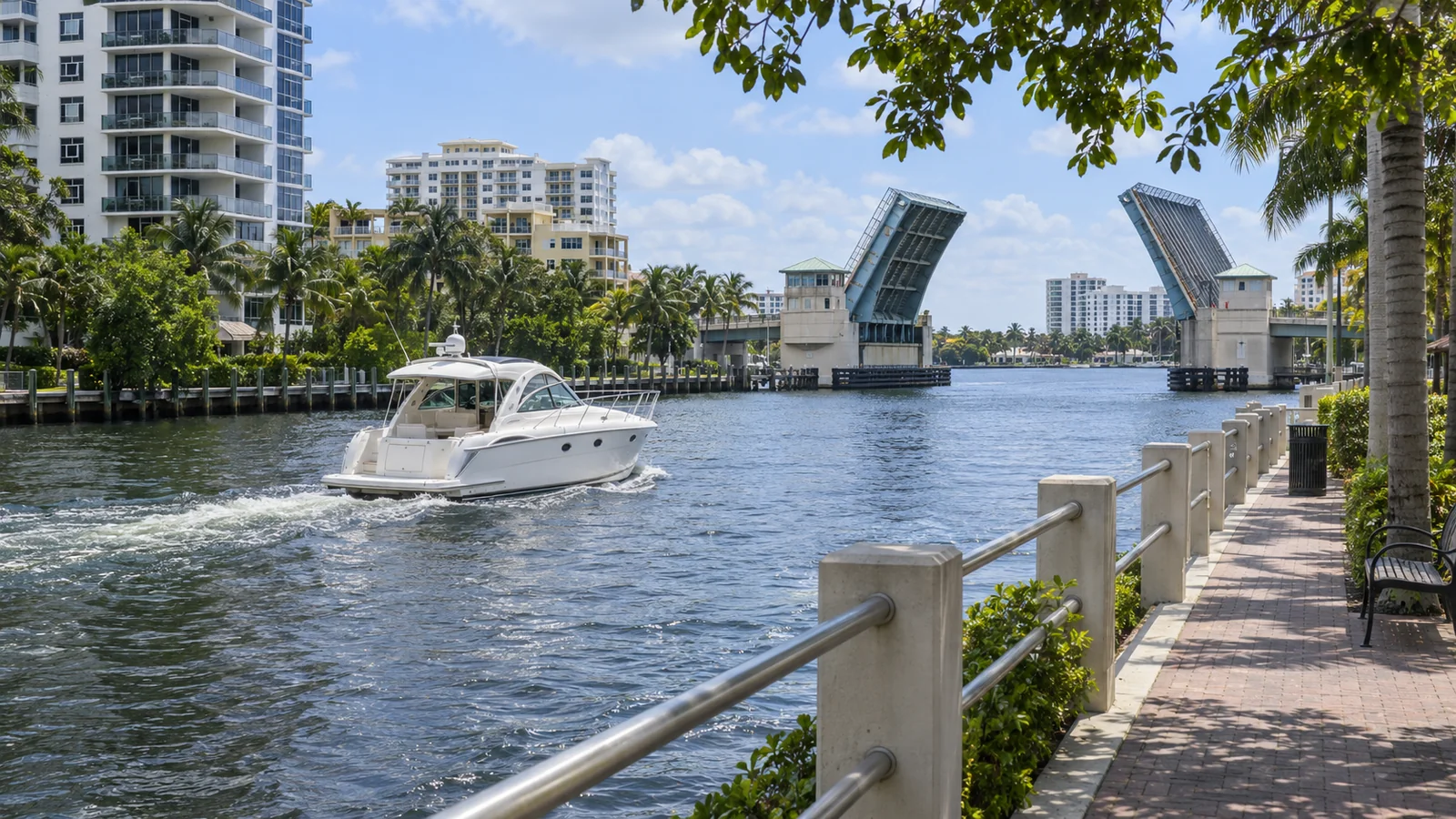
A yacht’s departure location matters as much as the skyline you hope to see. If the proposed journey uses a river or waterway with movable bridges, passage can depend on the actual vessel, the route and current operating information. Ask the charter team to review that part of the plan before attaching a fixed restaurant, event or return commitment.
This guide is for guests planning a booking, not for navigating a vessel or interpreting bridge rules. The captain must assess the actual trip. Start with the Miami yacht collection and describe the experience you want without promising guests a route the operator has not confirmed.
Identify the real departure point
Ask for the proposed boarding location and whether the route between that location and your intended cruising area passes through any movable bridges. A waterfront address alone does not explain the journey. Boats departing from different locations may have different route constraints even when both proposals describe a Miami charter.
Keep the distinction between boarding time and time in the preferred cruising area. A guest may picture the first photograph being taken against an open-water backdrop immediately after stepping aboard. If the actual departure involves a river transit, discuss that expectation before the group builds its timetable around it. Do not infer transit time from a road map.
Let the captain check current information
The US Coast Guard Navigation Center’s bridge notices are a primary starting point for bridge-related notices. Their existence is a reason to ask about current information, not a reason for a guest to promise that a particular opening will occur. A saved screenshot or an old article can be out of date for the booking day.
Ask whether any bridge-related restriction, temporary work or required coordination affects the proposed route. The operator needs to connect current information with the vessel’s actual requirements. Avoid requesting an improvised shortcut or pressuring the captain to make up time. If the route cannot support your priorities comfortably, revise the plan rather than treating the timetable as fixed.
Build a route brief with one priority
| Planning detail | Tell the charter team | Ask them to confirm |
|---|---|---|
| Departure | Boarding location in the proposal | Route from the berth to the intended area |
| Main experience | Cruising, a view or another agreed activity | What fits within the actual booking |
| Bridge passage | Any specific river route you hope to include | Vessel and current-route feasibility |
| Fixed commitment | A reservation or onward journey | How it affects the proposed return plan |
| Optional activity | The first item you would drop | A practical alternative if timing changes |
| Group communication | One organiser and a current contact | Who sends route or boarding updates |
Choose the main experience before adding extras. A river passage can itself be part of the day, but it should be an intentional choice. If the group mainly wants more time elsewhere, ask how the proposed departure and route serve that priority instead of comparing only yacht size or appearance.
Keep restaurant arrangements separate
A waterside restaurant booking does not confirm a berth, landing permission or a workable yacht route. If dining ashore is important, use the dock-and-dine planning guide to connect those separate arrangements. Tell the charter team about the reservation before it becomes the group’s immovable deadline.
Ask who handles a timing change and who contacts the restaurant. Do not assume the captain, restaurant and transport driver are sharing updates automatically. One organiser should keep the accepted plan current. A useful plan makes clear which parts are confirmed and which remain subject to the relevant provider’s approval.
Compare proposals by the usable day
When comparing boats or service lengths, ask what the proposed journey actually includes. The four-versus-eight-hour charter guide helps frame the service window, while the bridge conversation tests the specific route. Neither a longer booking nor a larger boat automatically removes every timing constraint.
Keep any transport after the charter visible. Give the chauffeur team the confirmed meeting point and ask how an updated return time should be communicated. Do not circulate several guessed marina locations to guests. If boarding or return arrangements change, send one clear update after the charter team confirms it.
A route question you can send with the enquiry
“We are considering [boat or proposal] from [boarding location] on [date]. Our main priority is [experience], and we have [fixed commitment, if any] afterwards. Does the intended route require movable-bridge passage, and what current constraints should shape the itinerary? Please suggest a workable alternative if that route does not fit.”
Keep the operator’s answer with the accepted booking. The useful result is a realistic itinerary, not a universal promise about Miami bridge openings. Let the captain manage navigation while the organiser manages the group’s expectations and separate reservations.