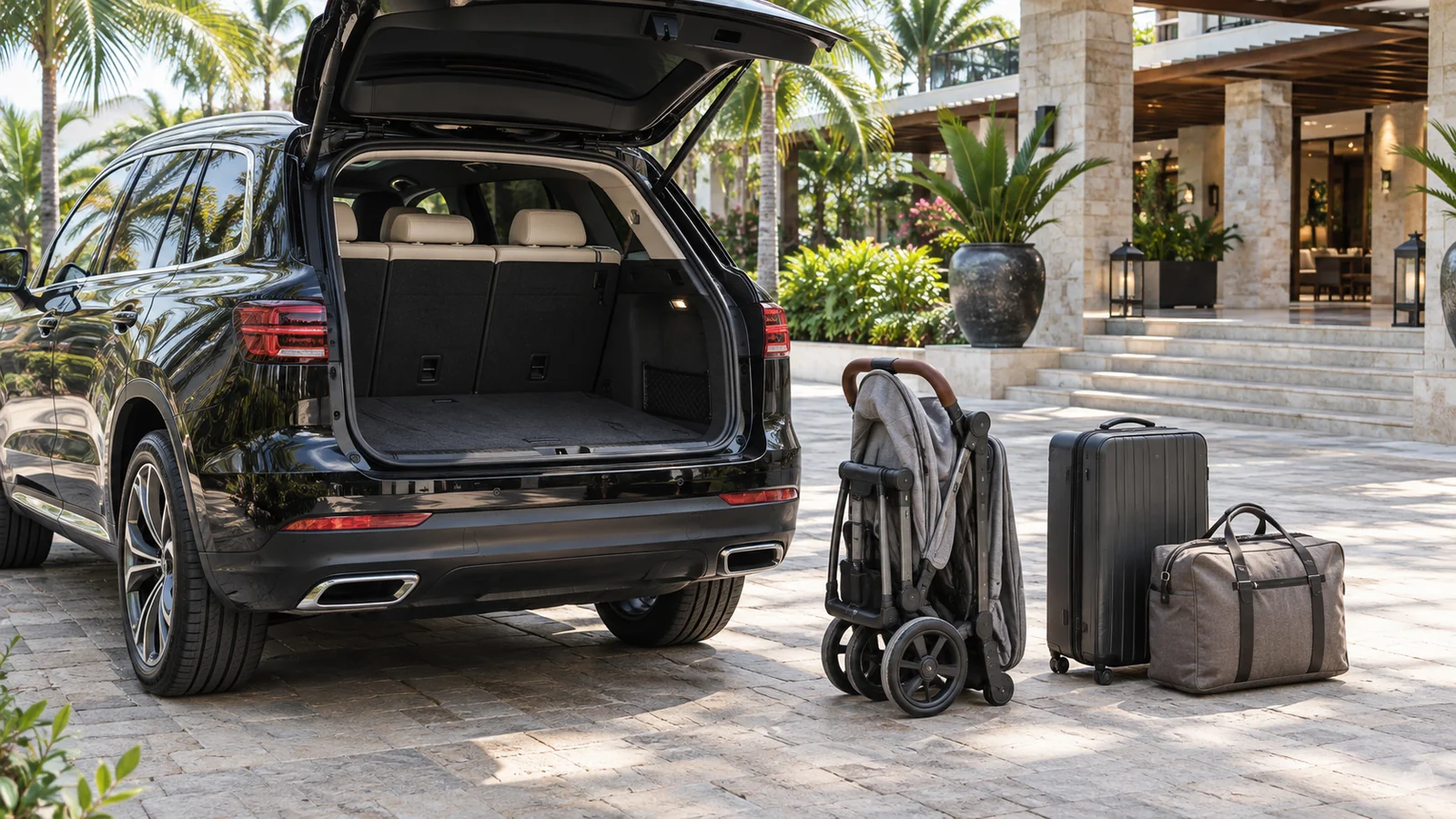
A stroller can look small beside a large SUV and still be awkward to load through its rear opening. Choosing a rental around it means checking the folded object, the opening and everything else travelling at the same time. Start with the actual stroller you will bring, rather than a photograph of an empty cargo area.
This guide concerns transporting the stroller as luggage. The child-seat planning guide covers the separate passenger-restraint discussion. A successful luggage plan must preserve the seats and restraints needed for the people in the car.
Measure the configuration you actually use
Fold the stroller according to its own instructions, then record its length, width and height in that configuration. Include parts that remain attached during travel. If the usual fold leaves a seat, bassinet or accessory separate, record that object separately rather than treating it as part of an invisible extra space allowance.
Keep the units clear and send photographs showing the folded object from more than one side. The UPPAbaby support library is one manufacturer example of where model-specific manuals and support belong; use the instructions for your own product and version. Do not assume a different model’s online dimensions describe the stroller in your hallway.
Compare the whole airport load
List all passengers, installed restraints, large suitcases, cabin cases and loose bags alongside the stroller. This is the load that needs assessing before you select the car. A family travelling light during the stay can still have a much larger load when leaving the airport or returning for the flight home.
The SUV-versus-sedan guide helps frame that comparison. An SUV label does not confirm usable cargo shape or an available seating configuration. A proposal that relies on folding a passenger seat is incomplete if somebody needs that seat. Ask the team to assess one combined list, not to approve the stroller and suitcases in separate conversations.
Ask about the opening and the loading sequence
| Part of the check | Information to provide | What the team needs to assess |
|---|---|---|
| Folded stroller | Length, width, height and photographs | Shape in the intended travel configuration |
| Separate components | Seat, bassinet or accessories carried apart | Additional pieces requiring space |
| Rear opening | Any important loading concern | Whether the actual opening is workable |
| Complete load | All people, restraints and bags | Fit without losing a required seat |
| Daily use | How often the stroller comes out | Access without repeatedly unloading everything |
| Return journey | Expected extra luggage or shopping | Whether the original arrangement still works |
Ask whether a physical loading check can be arranged for the actual proposed vehicle. Do not treat a request for such a check as a confirmed appointment or a guarantee of fit. If measurements leave doubt, resolve that before committing or consider a different practical arrangement.
Plan for the stops after check-in
Airport loading is only one part of the decision. During the stay, you may want the stroller available at a beach stop or restaurant while luggage remains elsewhere. Think through what has to come out first and whether the normal fold is manageable by the adult doing the loading.
Keep the manufacturer’s recommended handling method in mind. Do not choose a plan that depends on forced folding, unapproved disassembly or pressing a hatch against the stroller. Ask the rental team about any protective arrangement appropriate to the vehicle, especially if outdoor equipment may be wet or sandy. Do not assume a liner, cleaning allowance or particular accessory is supplied.
Repeat the assessment if the vehicle changes
A replacement vehicle should be checked on its own facts. Another SUV in the same broad class can have a different opening, rear layout or seat arrangement. Keep the original measurements and full load list ready so the team can reassess the proposal without reconstructing the enquiry.
At handover, compare the real arrangement with what was discussed while the car is stationary. Confirm access to every required passenger position and follow the vehicle’s instructions for carrying and securing belongings. If the fit is different from the agreed plan, ask for help before leaving; do not improvise by putting equipment where it interferes with passengers or controls.
Send a complete stroller-fit enquiry
“We are [passenger count] with [restraint arrangements], [bag list] and a stroller measuring [length × width × height and units] in its normal folded form. These components travel separately: [list]. Please assess the complete load in the actual car you propose, including the loading opening and the seats we need.”
Browse the Miami vehicle collection with that brief ready. The useful result is a car that works for the whole family journey, not simply the largest-looking vehicle in the gallery.