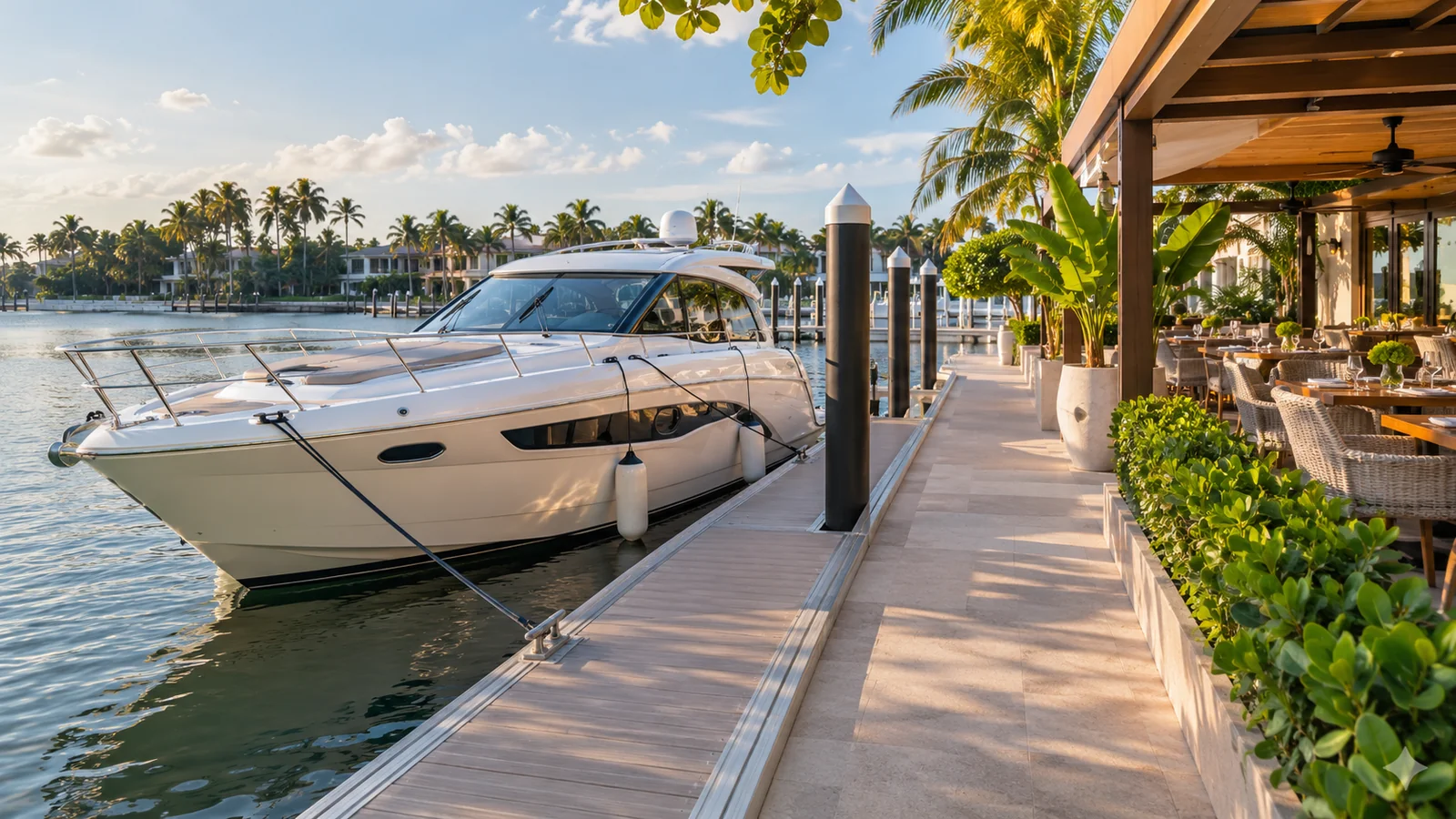
Choose a daytime outing when daylight activities are the main purpose of your Miami yacht charter. Choose a sunset-focused outing when the transition into evening is what your group most wants to experience. Then confirm the date, marina, start and finish times, and a route the captain considers workable. A sunset preference is not a guaranteed sky, location or extension of the booked hours.
The key is to separate three decisions: which yacht suits the guests, how long you need it and when that time should fall. The four-versus-eight-hour guide helps with duration. This guide focuses on the timing decision and how to prevent a short light window from making the rest of the day rushed.
Decide what the group would regret missing
Ask whether the priority is time in daylight, a relaxed meal aboard, conversation, photographs in evening light or the skyline after dark. Those are different requests. If swimming is important, discuss an approved stop and suitable conditions with the captain rather than assuming a sunset booking includes the same activity plan as an earlier departure.
For guests who mainly want to spend time together on deck, either period may work. Consider their preferences for shade, indoor seating and the length of the outing. For a group with a fixed dinner or event afterward, the return and onward journey need room in the schedule before you choose the departure window.
Use the actual date rather than a remembered sunset time
Sunset timing changes through the year, and local clock conventions matter when reading a time. Check the selected date and Miami local time with the team. Do not copy a time from another month's itinerary or assume that a charter advertised as evening will automatically include the light you want.
The US Naval Observatory's definitions distinguish sunset from twilight, the period after sunset when scattered sunlight still illuminates the sky. That distinction is useful for planning preferences, but neither a calculated time nor the word golden hour guarantees the appearance of the sky from a particular boat. Clouds, the horizon and your actual position affect what guests see.
Compare two realistic versions of the day
| Your priority | Earlier daytime window | Sunset-focused window |
|---|---|---|
| An approved daylight activity | Ask whether the proposed stop fits the route | Confirm enough suitable daylight remains |
| Evening atmosphere | May not include the change into evening | Put the desired light window into the brief |
| Photographs | Discuss light, shade and the intended subjects | Keep a short shot list and a weather alternative |
| Dinner ashore afterward | Leave room for return and transfer | Check whether the desired dinner time is realistic |
| Guests arriving from elsewhere | Allow travel and boarding time | Avoid a late arrival consuming the light window |
| Flexibility | Confirm the booked operating window | Do not assume the end time moves with a delay |
Compare the same yacht and duration first. Otherwise a difference in vessel size, guest arrangement or included services can be mistaken for a difference caused by departure time. Ask for complete proposals for both windows if both remain genuine options.
Confirm the marina-to-marina sequence
Obtain the exact departure marina and the crew's arrival instructions. Put travel to the marina, boarding, the booked outing, disembarkation and onward transport into one sequence. Ask which parts fall inside the charter time. The advertised duration alone does not describe the time between leaving your accommodation and reaching your next destination.
Tell the captain about the light preference and ask what can reasonably be planned from that departure point. Avoid requesting a chain of distant stops that leaves no flexibility around the desired moment. If a different route is needed on the day, follow the crew's instructions rather than treating a reference photograph as a promised location.
Keep a weather alternative that still suits the occasion
A daylight booking is not a weather guarantee, and a sunset booking is not a promise of clear skies. The National Weather Service's marine-forecast guidance explains why marine conditions need their own assessment. Let the captain make operational decisions; discuss cancellation and rescheduling terms separately with the booking team.
Decide what would still make the outing worthwhile if the sky differs from the reference image. For photographs, a small number of flexible shots is easier to coordinate than one exact composition that requires the boat to hold an unsuitable position. The yacht photography guide covers the separate permissions and equipment questions.
Send a timing brief before arranging the rest of the evening
State the date, total guests, preferred yacht, duration and one main priority. Explain whether sunset itself, daylight activities or an after-dark atmosphere matters most. Include any fixed commitment afterward and ask for a feasible start, return, marina and complete quote. Wait for that answer before treating a dinner reservation or transfer time as settled.
Browse the current yacht collection and retain the actual vessel link with the enquiry. For land transport, use the confirmed marina address when arranging a chauffeur. The stronger plan is the one that works for your guests and the agreed operating window, even if the light or route needs to change.