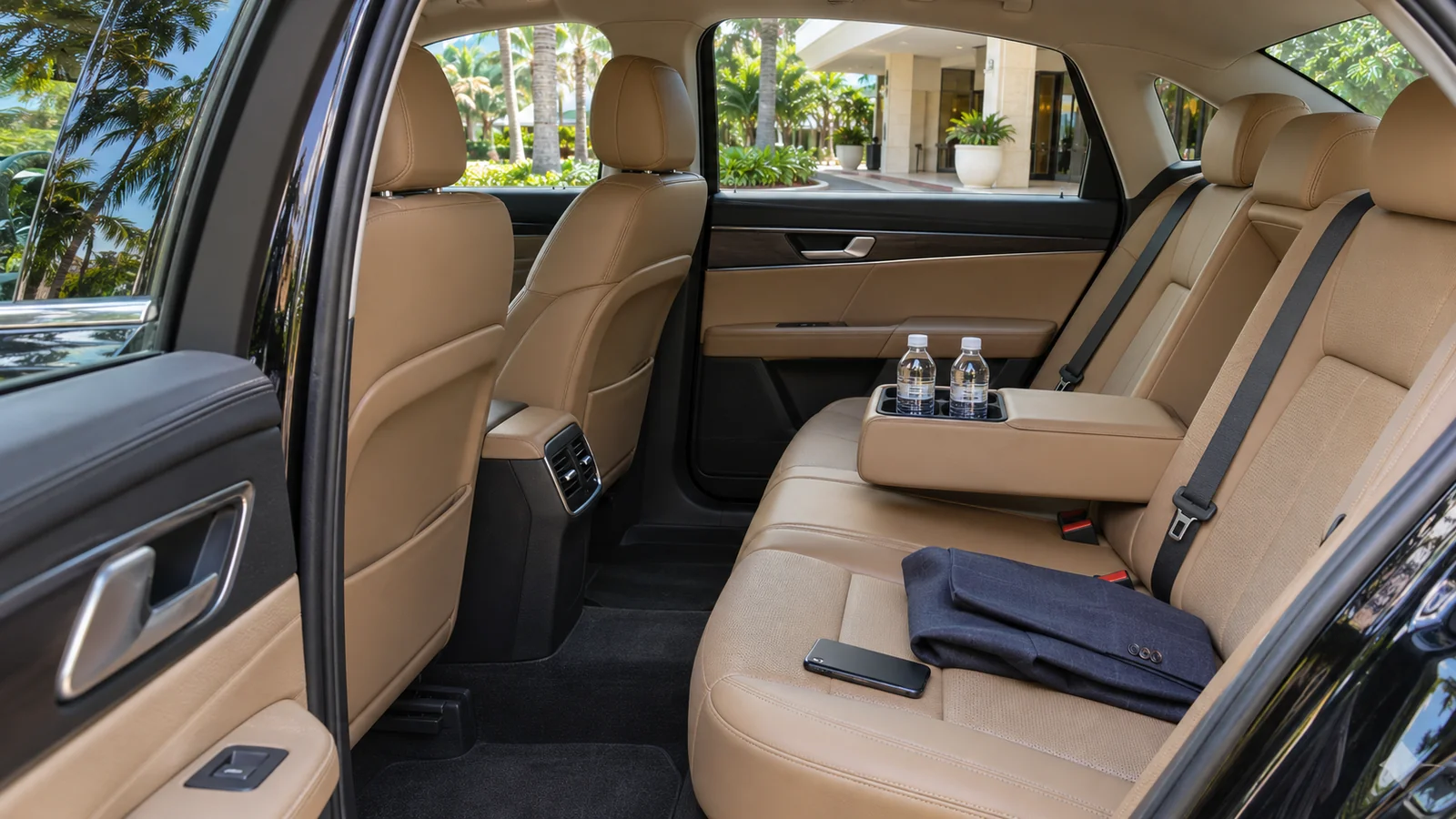
Good chauffeur etiquette is mostly clear communication. The driver needs a workable pickup point and accurate passenger information; guests need to know how to request a change without creating confusion. You do not need a formal script or knowledge of luxury-car customs to have a comfortable trip.
These practical habits help with a dinner transfer, a business appointment or a day with a private driver in Miami. They complement your actual booking terms rather than replacing them.
Choose one person to coordinate
For a group, nominate one contact for pickup instructions and changes. If two guests independently send different addresses, the driver may receive an impossible plan. Share the agreed vehicle contact details with the people who need them, then keep operational updates in one conversation.
Be ready at the confirmed meeting point, or send a clear update if you are delayed. Avoid “we are outside” when a hotel has several entrances. The hotel name, approved pickup entrance and a useful visible landmark are more helpful. For flight arrivals, the separate airport pickup checklist covers the information to provide before travel.
Treat a request as a request until it is confirmed
It is reasonable to ask about a stop, a later departure or a different destination. Ask as early as possible, and allow the driver or booking team to confirm whether it fits the service, timing and price. Telling friends that a detour is settled before the operator agrees creates unnecessary pressure for everyone.
| Situation | Useful message | What to establish |
|---|---|---|
| Dinner is running late | “We expect to leave around [time]. Can you confirm the revised pickup?” | Availability, meeting point and any waiting implications |
| An extra stop is proposed | “Could we add [address] before the hotel?” | Feasibility, extra time and any price change |
| The group size changes | “We now have [number] guests and [number] bags.” | Suitable capacity and whether another vehicle is required |
| Someone leaves separately | “The return group is now [number]; the destination is unchanged.” | Accurate final manifest and contact |
For a day with several planned stops, put the itinerary together before travel using the multi-stop private driver guide. Etiquette cannot compensate for a booking that leaves out half the route.
Keep boarding simple
Have smaller personal items together so you can move from the pickup point without a long search through bags. Let the driver explain where luggage will be placed, and tell them which bag contains something you need during the journey. Keep medication, passports and other essential personal items with you as appropriate; do not expect the driver to know their importance.
If you need assistance entering the car, say what would help before boarding. Do not assume a particular vehicle or driver can provide lifting, specialist equipment or personal care. Discuss practical access requirements with the booking team in advance.
Use the seat restraints provided for the journey. If you are travelling with children, arrange the appropriate restraint and installation plan ahead of time rather than treating it as an arrival-day accessory. Florida's occupant-protection guidance is a starting point for the safety information; confirm the arrangement for your exact passengers and service.
Ask directly about comfort and conversation
A simple request for a cooler cabin, quieter music or a quiet journey is perfectly clear. You do not need to communicate preferences through hints. Make requests while the driver can respond safely, and avoid showing a phone screen or reaching toward the front while the vehicle is moving.
If you need to take a call, use headphones where practical and keep the volume considerate. A private-car setting is not a reason to expose passwords, client documents or confidential speakerphone conversations. For sensitive business work, make your own privacy arrangements rather than assuming a booking promises secrecy or an acoustic barrier.
Photography and filming should be agreed before involving the driver or other guests. If a shoot is part of the booking, discuss it with the team instead of asking the driver to improvise a location or pose during a timed transfer.
Check before bringing food, drinks or decorations
Ask the operator about food, open drinks, smoking and decorations before the ride. Permission and any cleaning responsibility belong in the actual service conditions. Avoid treating a different company's policy or a previous trip as permission for this one.
Small choices help: close drink containers, keep bags clear of moving doors and tell the driver promptly if something spills. Do not try to repair an interior item or hide damage. Explain what happened so the operator can decide the next step.
Finish with a deliberate belongings check
Before leaving, check the seat, footwell, door pocket and charging connection. Account for the group's phones and bags, especially when different passengers leave at different stops. If something is missing later, give the booking team the trip date, route and item description without circulating unnecessary personal information.
For gratuities, ask whether any service charge or gratuity is included in your proposal. There is no need to guess from a blog percentage or assume that a line labelled “service” has a particular meaning. A courteous thank-you and a clear understanding of the bill make a better ending than uncertainty at the door.
Discuss the vehicle and itinerary through the current Miami chauffeur service. A clear request helps the team confirm the service that actually fits the trip.
Questions passengers ask
Is it rude to ask for a quiet ride?
No. State the preference politely and directly so the driver knows what suits you.
Can I add a stop once we are in the car?
You can ask, but wait for confirmation of feasibility, time and any price change before treating it as agreed.
Should everyone in a group message the driver?
One coordinating contact usually makes the instructions easier to follow. Keep the other passengers informed of the agreed plan.