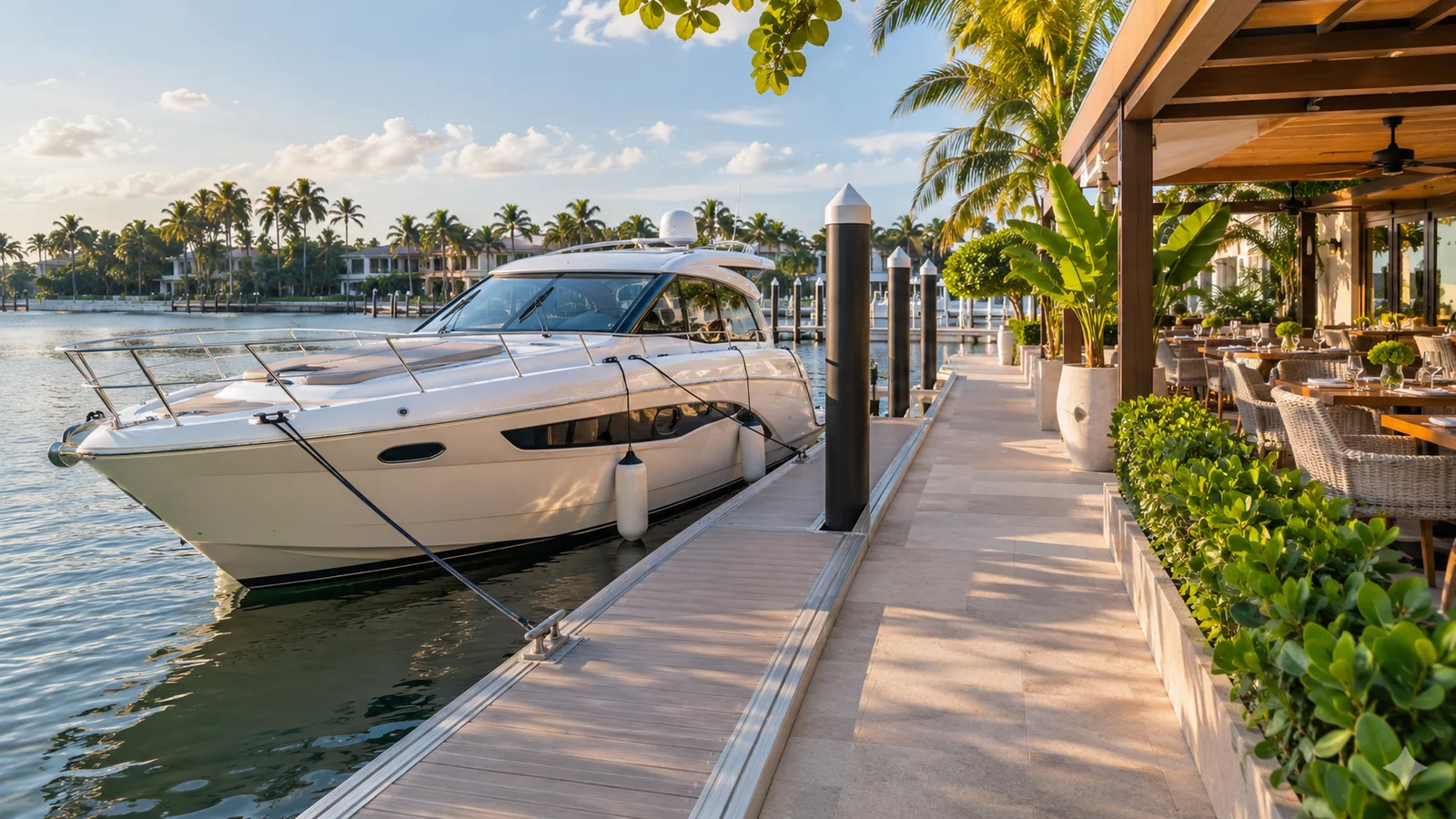
A calm-looking section of Biscayne Bay may be too shallow, sensitive to anchoring or outside the practical route for your chosen yacht. Tell the operator what the stop is for, then give the captain room to decide where or whether to pause. It helps to agree on a second option before promising the group a named location.
Describe the activity instead of just sending a map pin
A swim stop, a quiet lunch and a chance to look at the shoreline have different requirements. Tell the operator whether anyone hopes to enter the water and whether the group needs a ladder, a seated viewing area or time off the boat. Ask whether the boat’s draft, the route and the charter duration suit the request. Keep any named location provisional until the operator has considered actual conditions and site requirements.
Understand what a mooring buoy does
The National Park Service’s mooring buoy guide explains that mooring buoys can reduce damage from anchors and lines at sensitive reefs. The NPS location list warns that an individual buoy may be missing or damaged. A dot on a map does not reserve it, establish suitability for a specific vessel or guarantee safe access. The crew decides whether a particular stop is appropriate. Guests should wait for the crew’s briefing before moving about the deck or entering the water.
Compare the alternatives before departure
| Option | What the captain checks | What guests should plan |
|---|---|---|
| Suitable mooring buoy | Availability, current condition, depth and vessel fit | Wait for the briefing and keep the timing flexible |
| Anchoring where appropriate | Permission at the location, suitable bottom, room and conditions | Be ready to change location or activity |
| Berth arranged ashore | Permission, access and the practical route | Confirm any shore arrangements separately |
| Continue cruising | A feasible route within agreed time and current conditions | Prepare an onboard activity if the stop drops out |
The park boating guidance describes shallow water, areas with speed restrictions and the risk of running aground. Biscayne Bay covers more than the national park. Ask whether the proposed stop lies inside park waters and which current restrictions the operator has checked. Leave navigation, anchoring and mooring to the crew.
Make a fallback that still gives the group a good outing
If the group wants an hour in the water, discuss an alternate approved area or an itinerary focused on cruising. If photos and lunch are the priority, ask whether you can shift them to a suitable part of the trip. When a buoy is occupied, mark the activity as flexible rather than expecting the captain to wait until it clears. If one passenger cares most about easy boarding and comfortable seating, prioritize those needs with the operator before the day.
Consider a group that wants lunch at a calm stop and then a short spell in the water. The operator expects the intended buoy to be crowded. Before departure, agree that lunch can happen at a suitable alternate stop and that swimming can be dropped if the crew cannot confirm safe entry and exit. Tell guests about that arrangement before they pack gear or book a tightly timed ride home. A backup should fit the activity and the vessel. If the plan depends on a swim, ask whether staying aboard would still suit your group before committing. A place that works for a smaller boat may have unsuitable depth or maneuvering room for a larger yacht. If you are comparing two boats, ask how each would handle the same preferred itinerary.
Put the timing on one page
Write the marina, meeting time, primary activity, flexible stop and latest acceptable return. Tell the ground pickup contact what can change. Ask the operator how time at a mooring or berth fits into the quote and what happens if conditions shift. The separate Miami swim-versus-cruise guide helps your group choose a priority. For enquiry options see Pugachev’s yacht page. Share the practical goal in your message and let the operator evaluate boat suitability and routing.