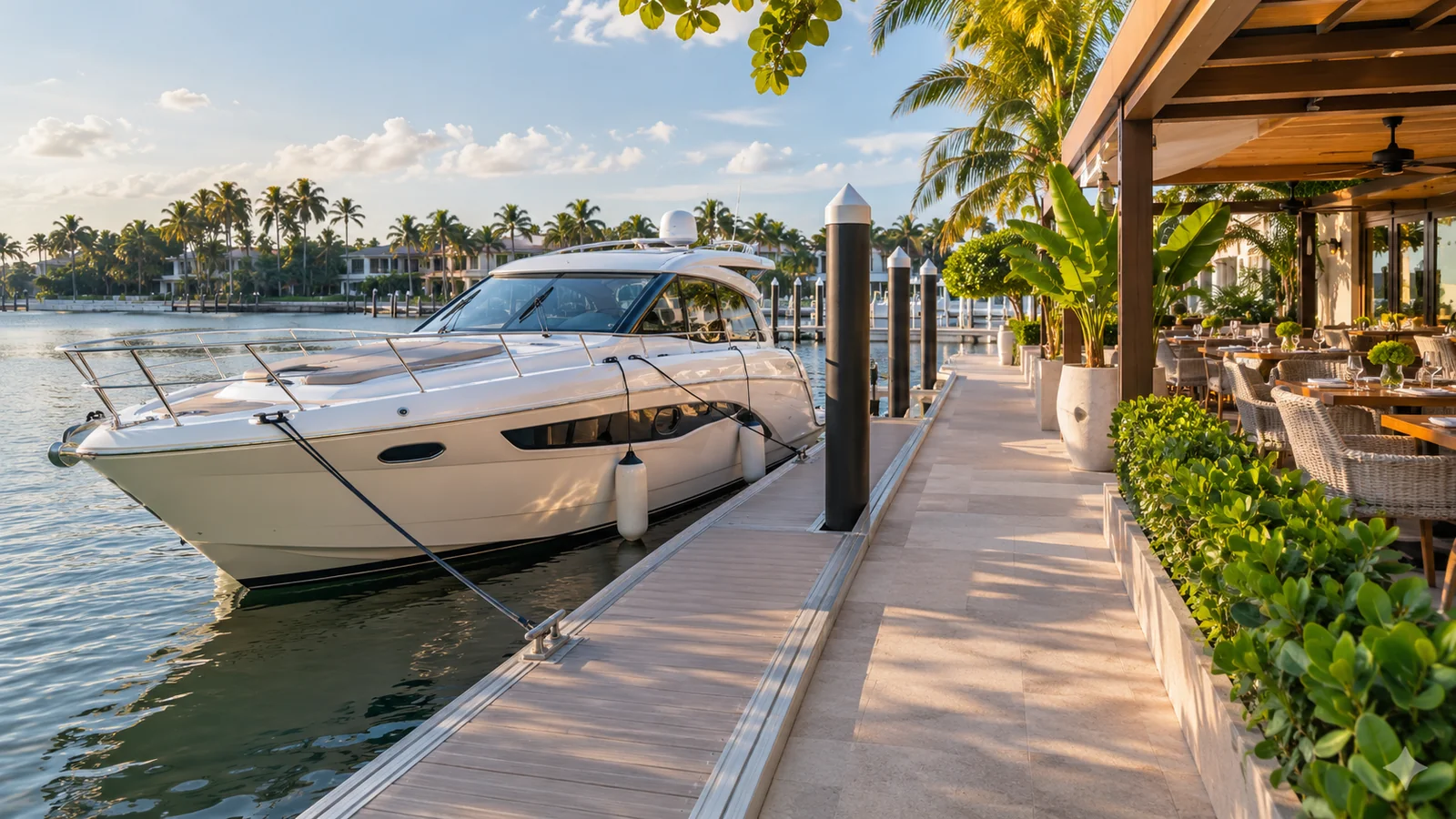
Ask the charter operator how the group would actually reach land before scheduling a stop ashore. The proposed plan might involve the yacht tying up at a berth, a smaller boat transferring guests, or a route that stays on the water. Each option needs its own approval and timing. The name of a waterfront restaurant or beach is only the starting point.
This guide is for the decision between a confirmed dock, a confirmed transfer by tender and keeping the group aboard. Give the operator the full guest list and the activity you want on land. Ask who confirms each part of the route.
Identify the point where you step onto land
Ask for the exact landing point, who manages it and whether the proposed vessel can use it. If a tender is suggested, ask which boat would carry the guests, where the transfer starts and ends, and who will operate it. Include any mobility equipment and the bags you need onshore.
A tender is a smaller boat used to move people or equipment between a larger vessel and shore. Royal Caribbean’s offshore assistance guidance describes a cruise example and explains how weather and landing conditions can affect that operation. Confirm the equipment, boarding steps and operational decision with your own charter operator.
Compare the three workable plans
| Proposed plan | What must be confirmed | Effect on the group |
|---|---|---|
| Yacht ties up | Usable berth, allowed stop, departure window and walking route | The group can plan around one confirmed place to leave the vessel |
| Tender transfer | Boat and operator, both transfer points, guest and equipment suitability, and return timing | There may be separate boarding steps and more than one group movement |
| Stay aboard | The revised activity and route that the captain can offer | The group can still enjoy the charter without a fixed shore connection |
If going ashore is essential, obtain the landing plan before paying for a time-sensitive activity. If the shoreline visit is optional, choose an onboard fallback that the group would still enjoy. Keep a restaurant booking flexible until the relevant contacts confirm the plan. The dock-and-dine guide covers coordinating a confirmed berth with a meal.
Ask about the full route for each guest
Look at both ends of any transfer. The path from yacht to tender may differ from the path from tender to land. Ask whether there are steps, changes in level or equipment restrictions, and how the return works later. Describe what each traveler needs to board comfortably. Let the operator evaluate the actual arrangement. The yacht boarding checklist helps you describe access needs without guessing from a gallery photo.
Ask which guests and equipment can move together and how the group will stay in contact. If a proposed transfer separates the group, assign a contact at each end. Leave room for the crew to change the plan based on the conditions.
Protect the return as well as the stop
Suppose the group has a lunch ashore and an airport ride afterward. Work backward from the land pickup. Ask when the group must leave the restaurant, where everyone meets for the return and which arrival time the operator considers workable. If the stop changes, the ground team needs the confirmed pickup location and timing.
Ask who will tell the group if the landing cannot proceed and when that decision is likely to be made. Agree on an alternative meal or activity before the day begins. Share one updated plan with all guests so an earlier message does not send part of the group to the wrong place.
Send the landing request with your charter enquiry
Give the date, vessel preference, guest count, desired shore activity, equipment and any fixed onward departure. Ask the Pugachev yacht team which arrangements can be confirmed for the actual charter, including the alternative if the shore stop is unavailable.
Common questions
Does a yacht listing establish that a tender is included?
Ask for a specific confirmation of the equipment, crew and landing plan for the proposed charter.
Can we arrange the return from shore once we arrive?
Agree on the meeting place, return window and contact before leaving the vessel. Follow the crew’s instructions if the arrangement changes.